
'After that the burdens of an ageing population will be upon us, and the share of working age population will shrink.'

Dr Lovi Raj Gupta, pro vice-chancellor, Lovely Professional University, explains how aspiring professionals can equip themselves for a competitive AI-driven job market.

Amazon has launched its next-generation Proteus robot in European fulfilment centres to assist employees with physically demanding tasks. This initiative is part of a broader 10 billion euro investment to modernise operations and create 25,000 new jobs, with Proteus using natural language commands for seamless human-robot collaboration.

Adani Properties has emerged as the largest value creator in the 2026 Grohe-Hurun India Real Estate 150, adding Rs 38,000 crore in valuation to become India's fourth-most valuable real estate company, with its valuation rising 72.5 per cent year-on-year to Rs 90,400 crore.

Larsen & Toubro (L&T) is significantly investing in automation, robotics, and technology-led solutions to scale up its construction activities, as increasing traditional manpower is no longer a viable growth option, according to CFO R Shankar Raman.

Adobe has announced the opening of a new office in Noida, its seventh in India. The new campus will house over 700 employees and signifies Adobe's continued focus on driving innovation from India.

The H-1B visa once symbolised the American Dream for Indians, but today's students are increasingly asking whether they need America at all. In 1995, the question was: How do I get to America? In 2026, it may be: Do I need to?

'Investors shouldn't let fear dictate their decisions. The most important step is simply to begin investing.'

A Deloitte survey reveals that Indian Gen Z and millennial professionals are rapidly adopting AI tools in the workplace, surpassing their global counterparts in usage and confidence, while also facing financial pressures and shifting workplace expectations.

TCS, India's largest IT firm, is aiming to become the world's leading AI-led technology services company. CEO K Krithivasan highlights the company's strategy, including upskilling its workforce and executing nation-scale projects in India.

The Department of Personnel and Training (DoPT) in India is actively integrating artificial intelligence (AI) into government processes to enhance efficiency, transparency, and accuracy. Initiatives include AI-enabled solutions for salary processing, grievance handling, and training content development, with a focus on data security and ethical use.

Hyundai Motor India Ltd (HMIL) announced plans to make Tamil Nadu its 'flagship EV hub for India', committing over 26,000 crore in investment, enhancing localisation, and creating approximately 2,000 additional jobs over the next five to six years. The company will roll out two new EV models from its Chennai facility this year, including its first mass-market dedicated EV.

A joint study by IBM and IndiaAI, a MeiTY initiative, indicates that Artificial Intelligence (AI) has the potential to contribute over USD 500 billion to India's economy by 2030. The report highlights the need for improved AI literacy, infrastructure, and data quality to fully realise this potential.

Of course, NOT! Here's why. And here's how you can increase your Rs 1 crore retirement corpus.

ServiceNow has announced an expansion of its AI Control Tower offering with new capabilities that give enterprises control over every AI system, agent, and workflow, regardless of where it runs.
Salesforce is concentrating on developing 'digital labour platforms' and using AI to augment human capabilities rather than replace them, according to a senior company official.
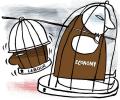
SIS Ltd, a security and facility management services provider, aims to cross Rs 20,000 crore in revenue by FY27, driven by strong double-digit growth, expansion of its service network, and a simplified regulatory framework under new labour codes, said its Group Managing Director Rituraj Sinha.

Despite a 21 per cent minimum wage hike in parts of Uttar Pradesh, factory workers in India, particularly in states like Uttar Pradesh and Haryana, continue to experience wages below the national average and a widening disparity compared to supervisors and managers.

Several parts of India are experiencing a severe heatwave, with temperatures soaring past 44 degrees Celsius. States are issuing alerts and taking measures to protect people and animals from the extreme conditions.

India's two-wheeler market is on the cusp of a significant transformation, with electric scooters projected to surpass motorcycles in volume terms within the next decade, driven by urbanisation, increased female workforce participation, and the accelerating shift towards electrification, according to an Equirus Securities report.

Bihar's greatest resource is not beneath its soil but above it -- its people. With a population approaching 140 million and one of India's youngest demographic profiles, Bihar possesses an asset many societies would envy, explains Bihar Governor Lieutenant General Syed Ata Hasnain (retd).

This could come as a setback to thousands of Indian engineers who have waited for years for their work visas to pave the way for the coveted Green Card.

South India's manufacturing, construction, and services sectors are grappling with severe labour shortages, prompting employers to offer attractive incentives like free air tickets and salary increments to lure migrant workers back from their home states after recent assembly elections.

Hiring demand strongest in ecommerce, tech startups, healthcare, and energy sectors, with Bengaluru, Hyderabad, and Pune leading.

'Decisions on talent and rewards have shifted as employees and companies are operating in a buyer's market across most skill categories.'

A section of industry may need to begin compliance immediately, even as most states are yet to notify their rules.

'Policy consistency combined with timely and calibrated reforms are expected to ensure that India not only maintains macroeconomic stability, but also emerges as a globally competitive and inclusive economy.'

TeamLease Digital CEO Neeti Sharma discusses how AI is driving a structural reset in the tech industry, leading to layoffs, reshaping hiring practices, and increasing job insecurity.

An inside look at the world of IPL net bowlers, the unsung heroes who hone their skills while bowling to cricket's biggest stars, hoping for a chance to shine.
The Unique Identification Authority of India (UIDAI) has announced that nearly 100 entities have been onboarded as offline verification seeking entities (OVSEs), marking a significant step in enabling secure, consent-based, and paperless verification through the Aadhaar offline mechanism.
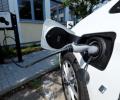
The Delhi government is set to equip its industrial training institutes (ITIs) with advanced labs to train young people in power electronics, electric vehicles, and the automotive sector, aiming to create a skilled workforce ready for industry demands.

'Tightening of visa norms for international students around the world are a concern for the university and the education sector, even as the UK continues to offer relatively attractive post-study work opportunities compared to several competing markets.'

A new survey indicates that Indian employers are planning to increase hiring in the April-June quarter, driven by strong business confidence and domestic demand. The survey also highlights the impact of AI adoption on workforce strategy and the challenges of talent scarcity.

Air India CEO and MD Campbell Wilson has resigned after four years at the helm, prompting the airline to form a committee to find his replacement. Wilson's tenure saw significant changes, including the merger of airlines and fleet expansion, but also faced challenges such as the London-bound flight crash and safety concerns.

India's clean energy technology industry is experiencing rapid growth, with recruitment increasing significantly due to policy support and investments in green energy. However, challenges remain in talent availability, skills alignment, and gender diversity.

India's fiscal deficit is projected to reach 4.5 per cent of GDP for the current fiscal year, exceeding the budgeted target, as the government's policy responses to the West Asia conflict are expected to strain public finances, according to research firm BMI.

'Workers are the people who create all the wealth in this country. How can you call them anti-national?'

However, under several external factors -- such as technological disruption or advancement, regulatory or policy changes, or economic shocks -- the gig workforce may grow only to 32.5 million by 2047, a report points out.

Tata Consultancy Services (TCS) has extended 25,000 offers to freshers for the current fiscal year (FY27), with future hiring decisions contingent on the demand scenario, according to CEO K Krithivasan.
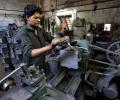
India's manufacturing sector growth slowed to a four-year low in March, impacted by cost pressures, competition, market uncertainty, and the Middle East conflict, according to the HSBC India Manufacturing PMI.
